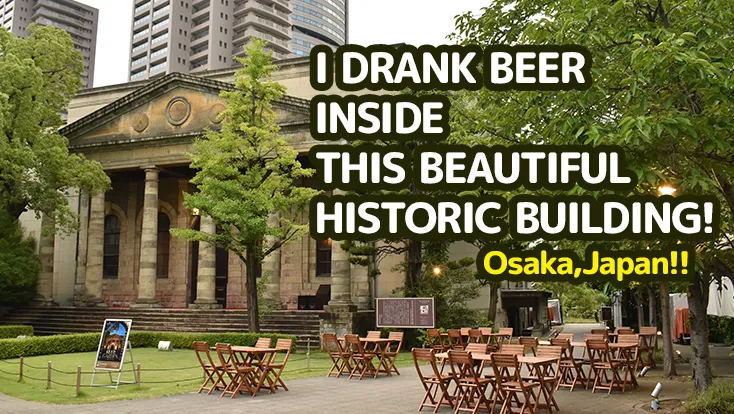
What This Post Covers
- Easy to reach from Kobe and Osaka!
- What is Nada-Gogo, the area famous for sake?
- Sake-making as a traditional Japanese craft
- A few tour recommendations
Hi, it’s Kotori! Today I want to talk about Kobe’s sake culture, which I love.
I actually went there and did a lot of sake tasting — I spent a good half-day just enjoying the area. I’ll share the details of that trip in a separate post soon!
Nada-Gogo: One of Japan’s Best-Known Sake Regions
Have you ever heard the name “Nada”?
It’s one of the most famous sake-producing areas in Japan, stretching from Kobe City to Nishinomiya City. Sake from this area has long been collectively known as “Nada no sake” (Nada sake).
Across Japan, regions known for rice production — called kome-dokoro — have traditionally also been strong sake-producing areas.
This “Nada” area, on the southern side of Hyogo Prefecture between Kobe and Nishinomiya, has the water and sakamai (sake rice) needed for sake-making. It’s also a well-known place where toji, skilled sake-brewing craftsmen, have carried on the tradition of sake-making.
The area has many sakagura, or sake breweries. Some are in buildings with a real sense of history, so you can also get a feel for Japan’s sake-making culture.
If you visit this area, you can:
- Visit lots of sakagura
- Drink delicious sake!
- Buy delicious souvenirs!
Personally, this is a place I’d really like people to visit if they come to Japan!
Compared with somewhere like Dotonbori in central Osaka or the busy streets of Kyoto, I found this area much more relaxed to walk around.
I really recommend it!
There are also guided tours available through Viator.
If you’d rather learn about Kobe’s sake culture from a guide and visit the area efficiently instead of planning your own route, a tour like this could be a good option.
I haven’t personally taken these tours. I looked through the available options and picked out a few that caught my eye.
Please note that I haven’t personally joined these tours, so please check the details directly with the tour operator before booking.
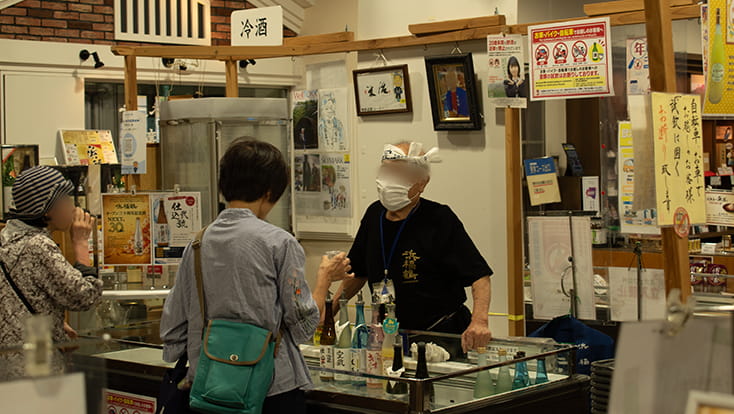
This photo shows visitors enjoying Japanese sake tasting and talking with brewery staff in Nada-Gogo!!
Quick Tip
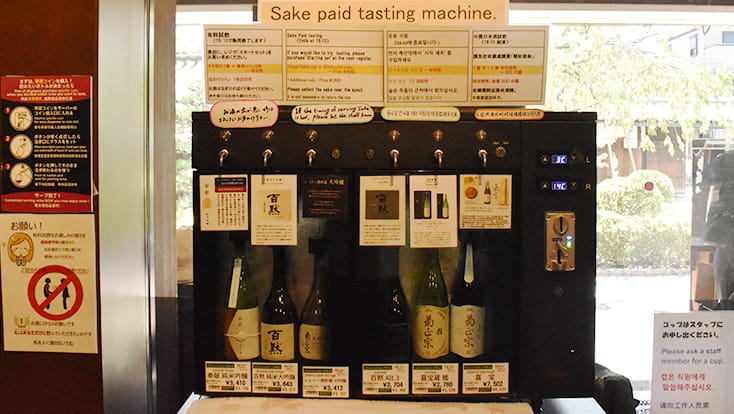
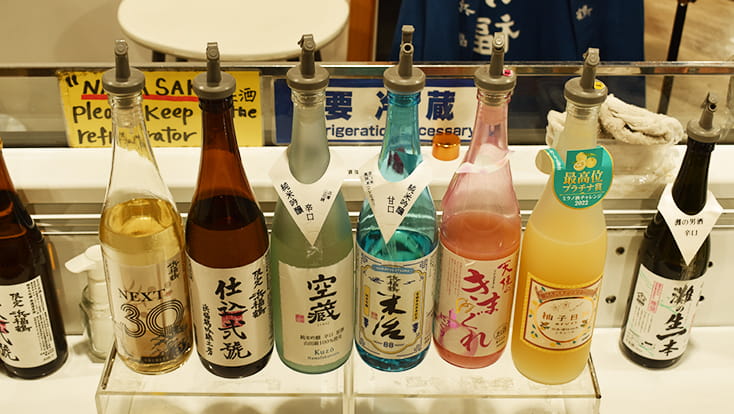
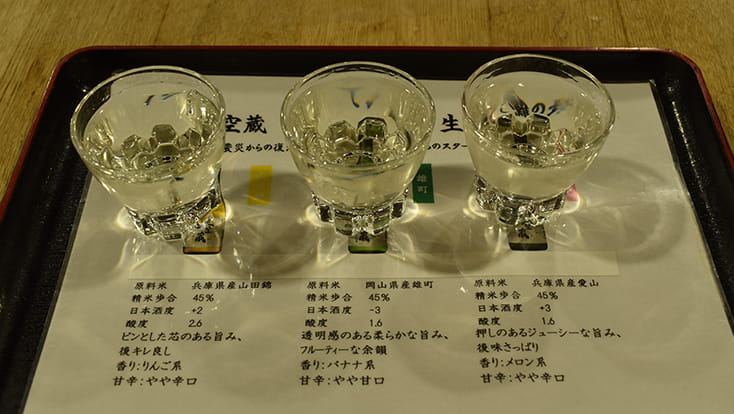
In Japan, there are places where you can enjoy sake tasting — sampling small amounts of sake you’re curious about before buying.
Sake tasting is something many people in Japan enjoy!
One of the great things about Nada-Gogo is that there are many sakagura where you can taste different kinds of sake. You can chat with the staff or producers while they pour small amounts into a cup for you to try, usually for a small fee.
Sake often has a fairly high alcohol content, with many varieties around 15% or more — though of course there are lower-alcohol options too.
If you’re someone who can drink a lot without any trouble, that’s great, but most people can’t drink that much. That’s where tasting comes in:
- With a tasting, you get a small amount poured into a cup
- You can try a variety of sake for a low price
- If you find one you like, you can buy it
For anyone who wants to try a range of sake, it’s a pretty practical system.
You could buy a bottle as a souvenir or enjoy it back at your hotel in the evening.
There are so many different kinds of sake, and their flavors can be quite different. Personally, I think it’s fun to be able to try them before deciding which one to buy.
One important thing to keep in mind: in Japan, drinking and driving is illegal, and drinking alcohol is also prohibited for anyone under the age of 20. That includes cars and bicycles — you can’t drive or ride either after drinking.
So I’d recommend exploring on foot and using taxis or trains to get around efficiently.
Children cannot drink alcohol, of course, but there are plenty of non-alcohol products and sweets produced by sake breweries as well. They can also enjoy seeing the sakagura themselves, so it’s still a place worth visiting with children.
What Is Nada-Gogo, Famous for Sake?
Nada-Gogo is a sake-producing area on the southern side of Hyogo Prefecture, right next to Osaka, where the tradition of sake-making has been carried on for generations.
It’s close to both Kobe and Osaka, making it easy to enjoy sake tastings and visit sakagura. The area is popular with both Japanese visitors and international travelers.
Here’s a look at where it is.
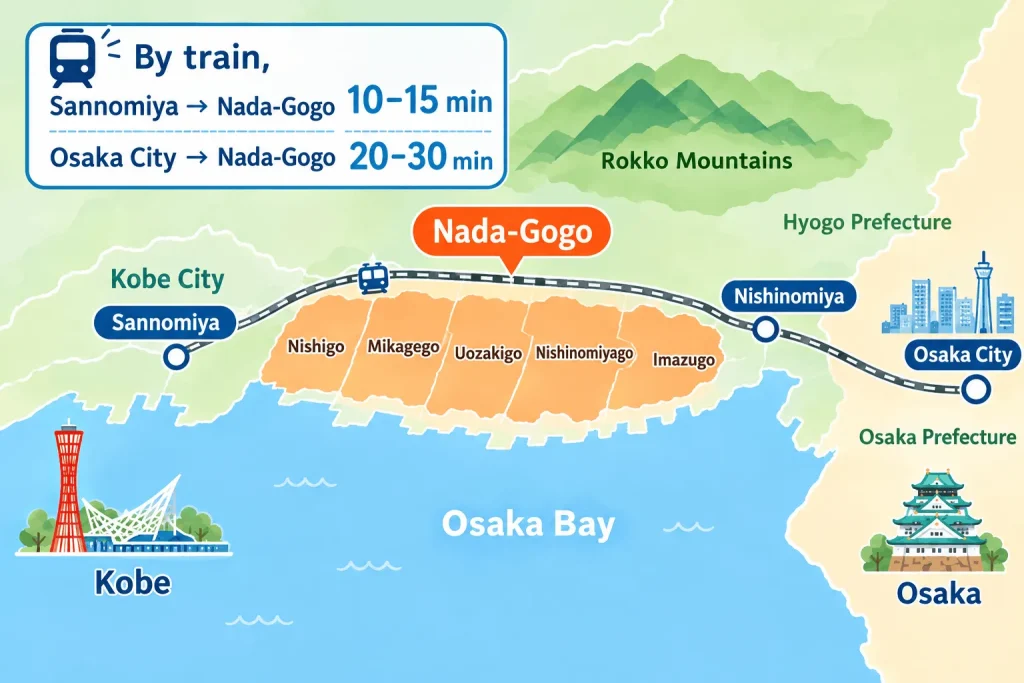
See? It’s close to both Osaka and Kobe!
By the way, Kobe and Nishinomiya are both cities in Hyogo Prefecture.
That said, “Nada” is a well-known name, but if you’ve looked into visiting the area, you may already know that the name can be a little confusing.
Hyogo Prefecture has several places with “Nada” in the name, such as Nada Ward and Higashinada Ward. But “Nada-Gogo” here refers to the wider area, stretching across several districts, where sake producers and breweries are concentrated.
So What Is Nada-Gogo?
Nada-Gogo is the collective name for the sake-producing area stretching from Kobe City to Nishinomiya City.
It’s not the name of a single city or town. Instead, it refers to five areas on the southern side, between Kobe and Nishinomiya, where sake-making has historically developed.
From west to east, the five areas are:
- Nishigo
- Mikagego
- Uozakigo
- Nishinomiyago
- Imazugo
Even today, this area is known as one of Japan’s largest sake-producing regions.
Why Did Nada-Gogo Become Such a Major Sake Region?
This area has had an environment well suited to sake-making for a long time.
In particular, it had three important things: water, sake rice, and skilled craftsmen.
There was also good transportation for carrying the finished sake to distant places.
The toji — craftsmen with the skills needed to support sake-making, a profession that’s become less common today — developed and passed down their techniques here. It’s really part of Japan’s monozukuri, or craftsmanship culture!
With all of these conditions coming together, Nada developed into a major sake-producing region.
“Rokko-oroshi”: The Winter Wind from the Rokko Mountains
North of Nada-Gogo lies the Rokko mountain range.
Nada-Gogo itself is on the southern side, but if you look north, you’ll see the mountains — that’s the Rokko mountain range.
As a bit of a side note, the Rokko mountains are also home to Arima Onsen, one of Japan’s best-known hot spring towns.
Spending the day enjoying sake tastings in Nada-Gogo and then staying overnight at Arima Onsen sounds like a pretty nice plan too!
Now, “Rokko-oroshi,” the cold winter wind that blows down from the Rokko Mountains, was also one of the conditions that helped make the area well suited to traditional sake-making.
“Miyamizu”: The Water Behind Nada-Gogo Sake
You can’t talk about sake-making in Nada-Gogo without mentioning miyamizu.
Miyamizu is mineral-rich groundwater from the Rokko mountain area that is well suited to sake-making. The characteristics of this water have a big effect on how the finished sake turns out.
Close to the Production Area for Yamada-Nishiki, an Important Sake Rice
One of the main ingredients in sake is sakamai, rice suited for sake brewing.
Among the many varieties of sakamai, Yamada-Nishiki grown in Hyogo Prefecture is highly regarded and has long been one of the representative varieties used in sake-making in Nada.
Tanba-Toji: The Craftsmen Behind Nada’s Sake
Natural conditions alone don’t make sake.
Another important part of Nada’s sake-making history was the people who had the skills to brew it.
The craftsmen known as Tanba-toji came to Nada from the Tanba region and developed their techniques over a long period of time while making use of the local conditions. This is also something worth remembering as part of why this area became such a major sake-producing region.
What Can You Experience in Nada-Gogo Today?
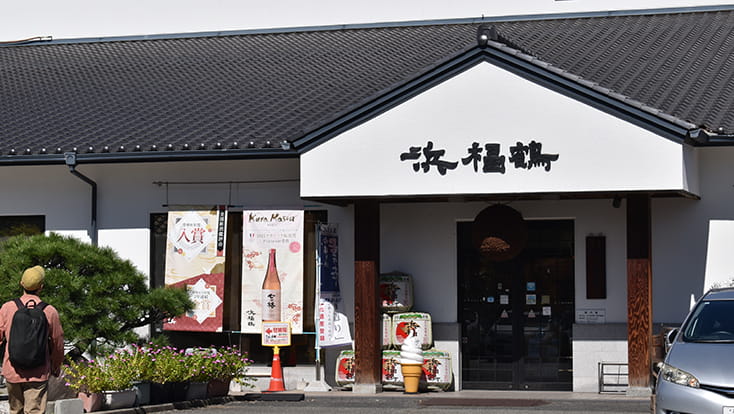
Nada-Gogo covers quite a wide area, so trying to visit all of it at once can be difficult.
Taking your time to see everything in a single day would probably be tough.
I’d recommend thinking about which sakagura you want to visit and planning an efficient route.
If it’s your first time, it might help to make a plan such as, “Today I’ll focus on the sakagura around Imazugo.”
Want to explore Nada-Gogo with a guide?
Take a look at these sake tours on Viator and find an experience that suits your trip.
Please note that I haven’t personally joined these tours, so please check the details directly with the tour operator before booking.
If one of them looks good to you, I hope you’ll give it a try!
In Summary: Why Nada-Gogo Is Worth Visiting
- The sake is delicious
- Historic sake-brewing buildings and streets
- You can explore parts of the area on foot
- You can taste before you buy
- Easy access from Osaka and Kobe
This time, I mainly wanted to introduce the history and sake culture of Nada-Gogo.
If you’re visiting Osaka or Kobe, I think it could be worth taking some time to walk around the area where so much of this sake culture developed.
I’ll be sharing my own experience of visiting the Nada sakagura from Osaka in a future post, including the actual route I took and what the experience was like — so look forward to that!
I hope your trip to Japan is a great one.
See you next time!

Bye-nyaaan~! 🐾